EV News
Ashok Leyland Eyes Airport Tarmac EVs, Banks on GST Boost for Growth

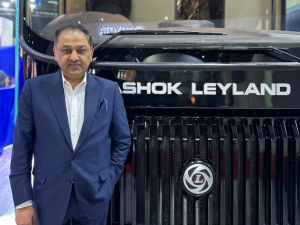
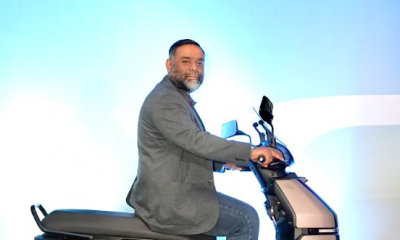
Ashok Leyland is gearing up to widen its electric footprint in the heavy-duty segment. After showcasing its electric terminal tractors for sea ports at Bharat Mobility 2025, the commercial vehicle major is now exploring similar solutions for airports. Mr. Shenu Agarwal, Managing Director and CEO of Ashok Leyland, told MOTORINDIA that airport tarmac tractors are among the many electric heavy-duty offerings under evaluation as the company looks to expand its product portfolio and tap into new specialised applications.
Airport tarmac tractors, or ground support equipment (GSE) tractors, are the workhorses of the airport apron. Built for sheer power and precision, these heavy-duty machines tow aircraft, move equipment, and handle pushback operations to guide planes safely away from gates. Designed to haul massive loads, they can effortlessly reposition even the largest aircraft, making them an essential part of airport ground operations while supporting airports’ eco-friendly initiatives.
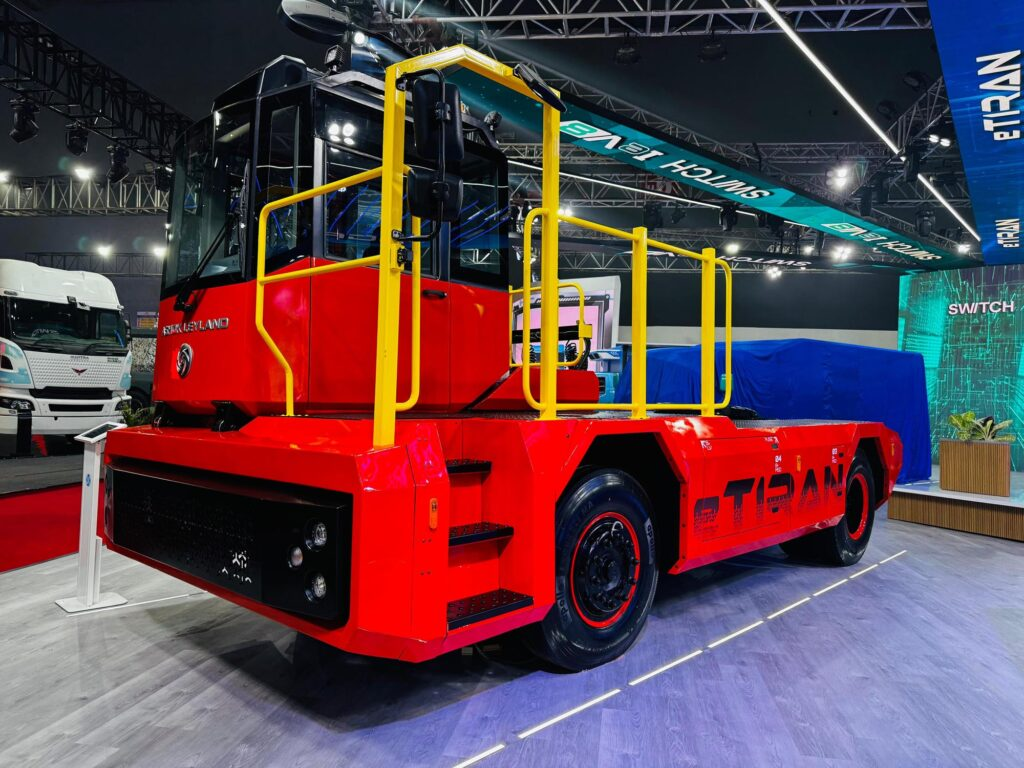
Ashok Leyland’s electric journey for unique applications began with the eTIRAN Terminal Tractor — a purpose-built vehicle crafted for the demanding world of port operations. It delivers 50–60% better total cost of ownership than its diesel counterparts, making a strong business case for electrification in this segment.
The eTIRAN is engineered to thrive in the tough, confined spaces of ports. It offers a flexible battery range of 180–350 km and features an air-conditioned cabin with a 360-degree view for better visibility, easy entry and exit, ADAS-based safety alerts, and hill-start assist. Port terminal trucks typically run almost non-stop — 20 to 21 hours a day — within a fixed area. This makes it practical to set up dedicated charging infrastructure, removing one of the biggest barriers to EV adoption. By tapping into this unique use case, the eTIRAN is showing how electrification can reshape heavy-duty operations.
CVs Emerge as the Biggest Winners of GST Cut
Mr. Agarwal sees the recent GST revision as a game-changer for the CV industry. He believes this segment — especially buses and medium and heavy-duty trucks (MHCVs) — stands to gain the most, calling it the long-awaited trigger the market needed.
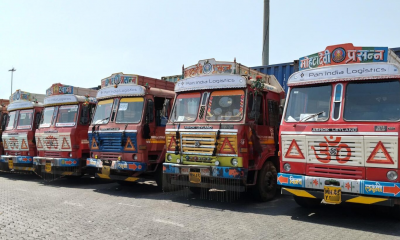
Under the new rules, the base ex-tax prices will stay the same, which means the tax cut will flow directly to customers. This offers three big advantages. First, it will immediately lower prices for retail buyers of MHCVs (who make up 40–60% of Ashok Leyland’s sales), cutting costs by nearly 10%. Fleet operators may not see as much benefit, but smaller buyers will.
Second, the GST cut on several goods will boost consumption, leading to higher freight movement and more demand for CVs. Third, it could finally push customers to scrap and replace old trucks — Mr. Agarwal estimates about 11 to 12 lakh MHCVs are due for replacement. He expects clearer signs of this demand shift to emerge after the monsoon, around October–November.
Racing to Meet Soaring Demand for Fully Built Buses
Ashok Leyland is facing intense pressure to keep up with surging demand in the bus segment, especially for fully built buses. Mr. Agarwal explained that many State Transport Undertakings and private operators now prefer buying complete buses from a single source rather than purchasing a chassis and getting the body built separately.
This shift has created a sharp spike in demand — over 1,500 units a month — while the company can currently produce only about 650. To bridge this gap, Ashok Leyland is ramping up capacity across all its bus plants. By 1 April, it plans to raise output to 1,650 units a month, backed by a ₹120-crore expansion at its Alwar and Trichy plants, alongside a revitalised facility in Andhra Pradesh. Besides, the upcoming greenfield plant in Lucknow will become operational by November and is expected to gradually ramp up, reaching full capacity by the first quarter of CY26, he said.
GST Boost Sets the Stage for MHCV Revival
Before the recent GST cut, the medium and heavy commercial vehicle (MHCV) market was expected to grow only in mid-single digits. Mr. Agarwal said a sudden jump to double-digit growth is unlikely, but retail buyers are set to gain the most from the price reduction. Early signs of headwinds are also easing — banks are more comfortable lending as ticket sizes fall, and while the monsoon has caused short-term disruptions, it is expected to support mining activity in the coming months. With strong prospects in infrastructure and mining, demand for tippers is also likely to rise.
Ashok Leyland is preparing to scale up production of heavy-duty electric trucks, especially for niche areas like mining where they can offer up to 50% better total cost of ownership than diesel models. However, he pointed out that the EV supply chain remains a challenge, with about 65% of components — mainly batteries — still imported. To fix this, the company plans a step-by-step localisation strategy: starting with battery pack assembly, setting up a dedicated battery R&D centre to work on materials, electrolytes, thermal systems and chemistries, and building multiple partnerships, he added.