EV News
The New Tata Tiago Proves That Small Cars Can Dream Big

Three powertrains, one character. Whether you choose petrol, CNG, or electric, the new Tiago is built to suit the way you live and the way you drive.
To match changing trends and evolving tastes, Tata Motors has launched a completely reimagined Tiago — a car that shares its name with its predecessor but little else. From the front bumper to the rear, and from the dashboard to the rear windscreen, everything has been rethought and redone. It is not a facelift. It is not a refresh. It is, for all practical purposes, a new car.
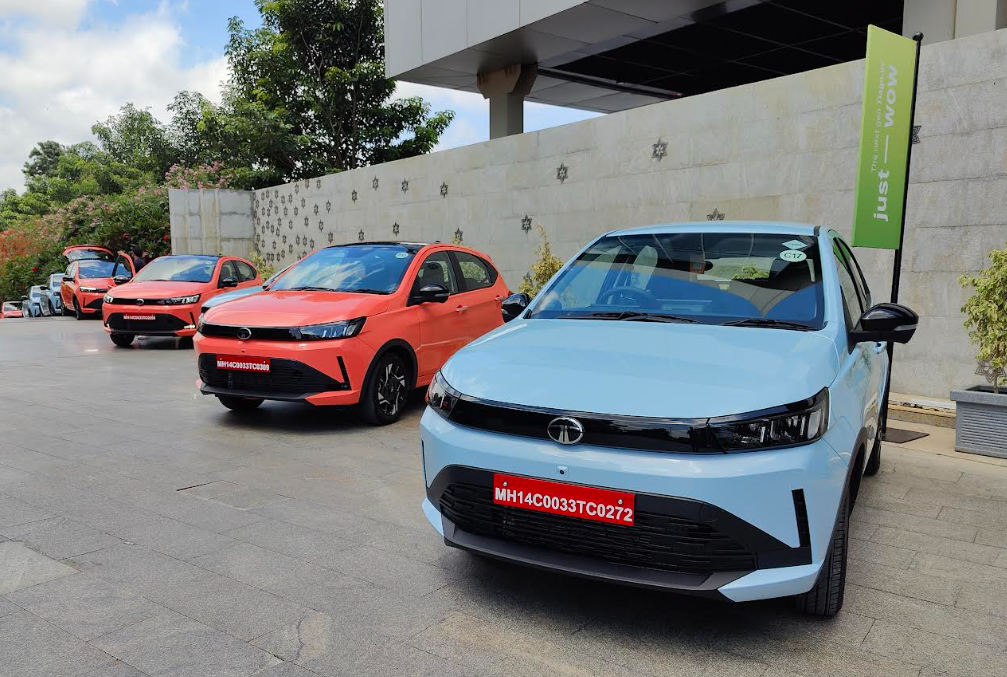
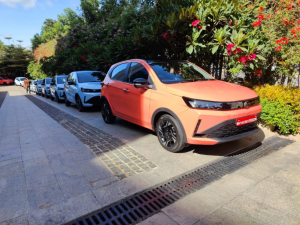
Stand in front of the new Tiago and something immediately feels different. The nose is flatter, broader, and more self-assured than the car it replaces — giving it a presence on the road that punches well above its hatchback category. This is evident in the electric variant. The petrol and iCNG variants feature a wide, horizontal black grille stretching nearly corner to corner across the lower bumper, with a flat, louvred pattern and a slightly textured finish — a detail absent in the electric variant.
Look closer and you begin to spot the influences: a little of the Altroz’s sharp, premium language here, a nod to the original Tiago’s approachable character there. It is a thoughtful fusion, and it works. The wheel arch cladding adds to the effect, making the car look wider and more muscular, while the textured grain finish keeps it from too flashy. Up front, LED headlamps with integrated DRLs complete the picture.
Interior
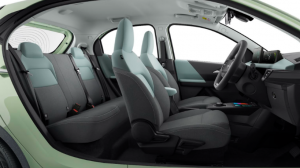
Step inside and the transformation is even more striking. This is not just a touch-up job. It has been rethought entirely — new architecture, new proportions, and a completely different feeling the moment you settle into the seat. Soft materials appear throughout — on the dashboard, the doors, the centre console, and all the way to the rear. The fabric-wrapped finish adds warmth and texture, though the plastics on the side pillars feel a bit rough — likely a result of the company’s use of 20% recycled materials, a commendable sustainability initiative that comes with its own minor trade-offs.
The 10.25-inch HD infotainment screen with wireless connectivity and a grand tech console with a dedicated smartphone deck (without wireless charging) bring the technology in, while keeping the cabin feeling welcoming rather than bland. Even the smallest details were given due attention— the window switches, the button textures, the placement of every control and the rear A/c vents. Nothing, it seems, was left to chance.
Safety
On the safety front, the new Tiago carries its credentials quietly but convincingly. The Safety Dome packs over 90 safety features, six airbags, and an ultra-high strength steel body offering 360-degree protection for every occupant. A 360-degree surround view camera, blind view monitor, Electronic Stability Program, and Hill Hold Control round out a package that is as reassuring in the city as it is on a winding ghat road. For a car at this price point, that is a genuinely impressive list.
Variants
The Tiago comes in three variants — petrol, CNG, and electric — each suited to a different kind of buyer. The petrol for those who want everyday flexibility, the CNG for city drivers looking to cut running costs, and the electric for those ready to go green without worrying about range. The floating instrument cluster, 360-degree surround view camera, and impressive AC performance all make their presence felt in real-world driving — particularly on tight village roads and congested city stretches where the surround camera proved genuinely invaluable, in both all the variants. While petrol variant comes with alloy wheels the other two comes with steel wheels with hyper style wheel covers.
Behind the Wheel — Three Cars, One Character
Having driven all three variants back-to-back, what stands out most is how consistent the Tiago feels across the range. The thigh support makes a noticeable difference on longer drives, the improved visibility inspires confidence in city traffic, and the sheer breadth of safety and convenience features — at this price point — leaves you wondering why you would need to spend more. Tata Motors has made no secret of its intent here: to put features that once belonged to premium cars into the hands of everyday buyers.
The Petrol Engine — Steady and Sensible
The petrol Tiago continues with the familiar 1.2-litre three-cylinder engine, producing 86 horsepower and 113 Nm of torque — numbers that are perfectly adequate for what this car is designed to do. The engine pulls smoothly from low speeds in a higher gear effortlessly, giving a relaxed driving making city commuting genuinely stress-free. On the highway, it settles into a comfortable cruise at about 120kmph. Downshift is still easier to complete an overtake confidently.
The noticeable issue, though not alarming is the engine noise in the cabin and a bit of vibration in the gear lever. As speeds build, the vibrations ease, but the engine noise remains mildly even at low speeds, due to the three-cylinder configuration.
The five-speed manual gearbox mated to the engine is a genuine strength. Shifts are light and easy, the clutch is manageable enough for heavy city traffic, and the gear-shift is smoother make the drive enjoyable.
The CNG Option
The CNG variant deserves a special mention. As India’s first AMT CNG car, it brings together two things that city drivers care about most — the ease of an automatic gearbox and the economy of running on CNG. It makes a good first impression with a simple but useful feature — it starts directly in CNG mode, skipping the petrol switchover that most CNG cars require.
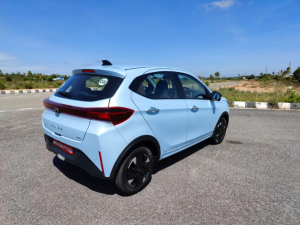
Under the hood, the same 1.2-litre three-cylinder engine does the work, producing 75 horsepower and 96.5 Nm of torque on CNG — slightly less than the petrol version. In the city, you would hardly notice the difference. The car keeps up with traffic easily, moves through gaps confidently, and feels perfectly at ease in the kind of stop-and-go conditions that define most Indian commutes. It is only out on the highway, when a quick overtake is needed, that the CNG’s slightly relaxed nature becomes apparent — a little more throttle input is needed compared to the petrol, but it gets the job done. Paddle shifters come to the rescue here — a first for any CNG automatic in this class — making overtaking easier and more confident. The rotary gear selector is smooth and intuitive, switching between drive and reverse quickly as long as the brake pedal is firmly pressed.
The Electric One — Quick, Capable, and Reassuring
The Tiago.ev makes a compelling case for going electric without making it feel like a leap of faith. Flick it into Sport Mode and the 114 Nm of instant torque pushes you back into your seat — 0 to 60 km/h in just 5.7 seconds is genuinely quick for a car in this segment and price range. For those worried about running out of charge, the fast-charging capability adds 100 km of range in just 18 minutes — enough for two days of typical city commuting in a single short stop. And for those worried about battery life in the long run, the lifetime HV battery warranty with unlimited kilometres is a reassuring promise.
Ride Quality
The car glides over bumps without letting any of it reach the cabin — as comfortable as ever. At triple-digit highway speeds, it stays planted and stable, the steering weights up nicely for confident cornering, and crosswinds barely disturb its composure. Braking is strong and grip levels inspire confidence through bends. For a car at this price, the Tiago’s ride and handling package remains one of the best reasons to choose it.
One Word Says It All
Small cars are often the hardest to get right. The space is tight, the budget is visible, and the buyer is unforgiving. There is nowhere to hide. And yet, the new Tiago has been designed with the same care and ambition that Tata Motors brings to every car in its portfolio — regardless of price. When asked what the officials hoped customers would feel the moment they walked into a showroom and saw the new Tiago for the first time, the team had just one word. Wow! It is a big ask for a small car. But having spent a day with it on the road, it is not hard to see why they believed it was possible.