EV News
How Montra’s Ambattur plant reinvents Manufacturing for Electric Age

Montra Electric, part of the Murugappa Group, began as a simple idea about five years ago — a belief that mobility could be cleaner, smarter, and far more sustainable. What started as a passion project has now evolved into a movement, supporting India’s electric mobility landscape. The company’s transformation is most evident at its Ambattur plant in Chennai, a facility that reflects both its legacy and its significant leap into the future.
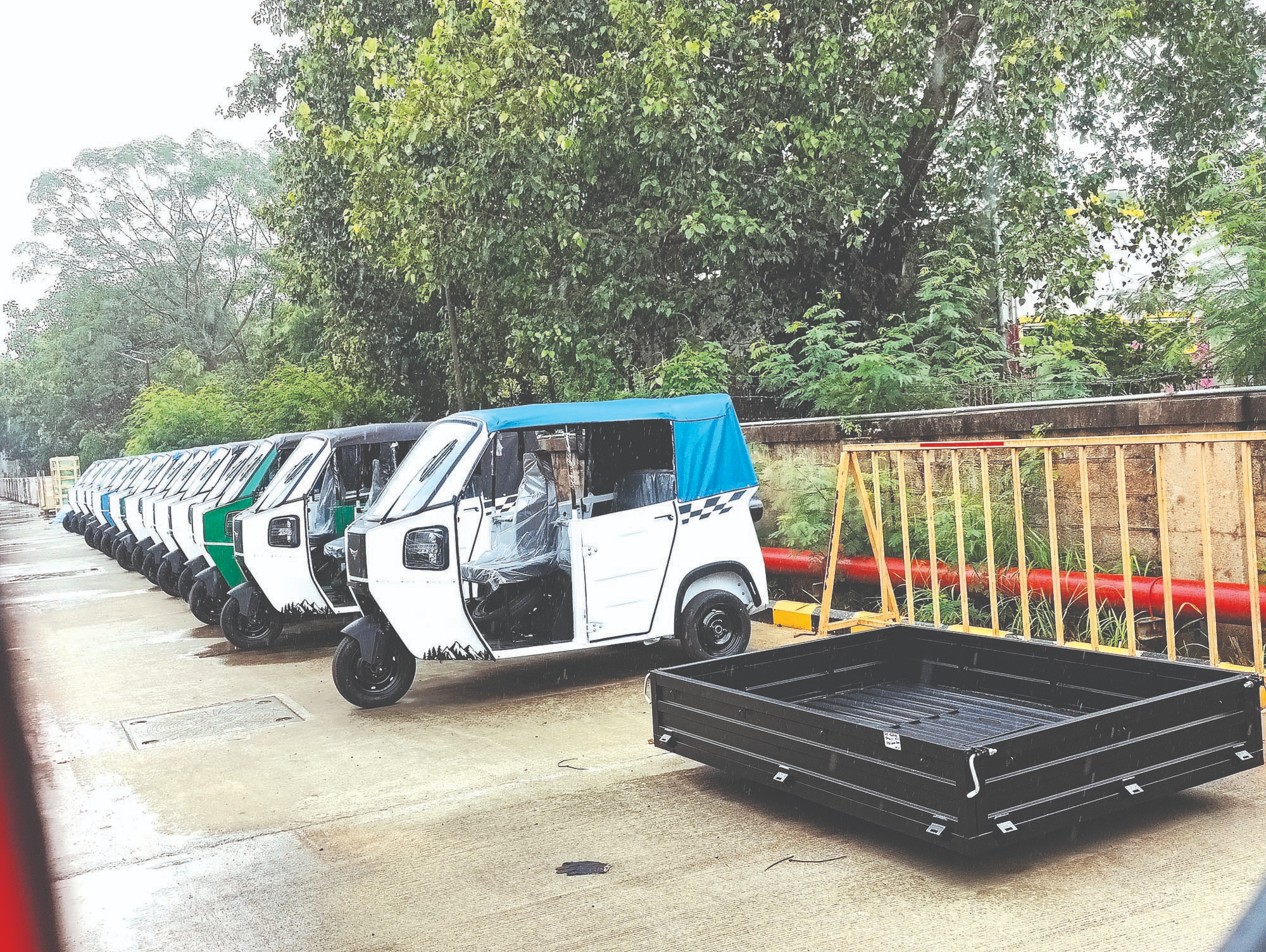
Once a major hub for bicycle manufacturing, the Ambattur factory has reinvented itself as a sophisticated EV centre showcasing integrated operations, advanced technology, and a highly localised supply chain. It now produces multiple variants of cargo and passenger three-wheelers, offering combinations in body size, charging type, and performance levels. Flagship products such as the Super Auto (160 km true range) — with over 13,000 units clocking nearly 150 million kilometres — highlight how quickly the brand has scaled. The Super Cargo lineup, comes with 170 km true range powered by 13.8 kWh battery (15-minute full charge) and 1.2 tonne Super Capacity Cargo (in three options – 170 cuft, 140 cuft and 6.2 feet FT). The distribution network too has expanded to 150 showrooms across 114 markets, with especially strong traction in the eastern and northeastern regions.
From Pedals to Power
The company’s evolution is rooted in its long manufacturing heritage. For decades, the facility was known for building bicycles — a product that symbolised mobility for millions. The vision within the organisation, however, consistently pushed boundaries. By 2020, a major transformation began: large parts of bicycle production were shifted to Rajpura in Punjab, and the available space was repurposed to begin a full-scale transition into electric mobility.
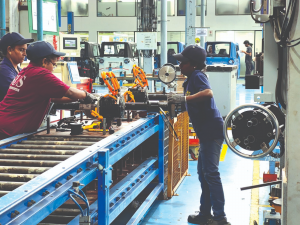
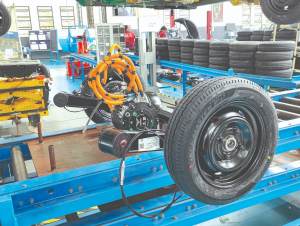
Today, the group operates multiple EV verticals across the region — E3Ws in Ambattur, electric tractors in Chembarambakkam, small commercial vehicles in Ponneri (all three locations in Chennai), and heavy-duty EVs in NCR. The expansion in Ambattur is guided by the demands of a new generation of auto drivers who prioritise modern design, comfort, efficiency, and higher earnings.
At the centre of this shift stands the Ambattur plant — a 12-acre space built specifically for E3W manufacturing. The unit manages key operations such as painting, assembly, end-of-line testing, and precision finishing. Welding of BIW frames takes place at a supplier facility just 5 km away, ensuring tight manufacturing synchronisation and efficient throughput.
A Factory that Grew, Adapted, and Reinvented itself
Walking through the Ambattur plant is like witnessing a living narrative of manufacturing evolution. Spaces once used for cycle warehousing and assembly have been redesigned for modern EV production. By 2022, this transformation culminated in the creation of the Montra Electric brand, backed by a robust R&D foundation.
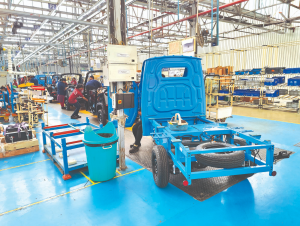
This strong R&D backbone begins at the Corporate Technology Centre, where a dedicated team first built “concept mule” vehicles to test early powertrain and battery systems. The centre houses a 120-member design team, a ground-floor quality division, and a Proto Shop equipped with intensive validation tools — from three-post vibration rigs and door-latching testers to brake validation systems and long-duration dynamometers. Today, vehicle-level testing happens at the SCV plant, enabling centralised, high-capacity validation.
Quality plays a central role across the ecosystem. Every component undergoes rigorous checks through system, process, and PPAP audits before entering production. On the line, digital torque tools, QR-based battery marriage systems, poka-yoke methodologies, and detailed history cards ensure each vehicle is assembled with complete traceability and error-proofing.
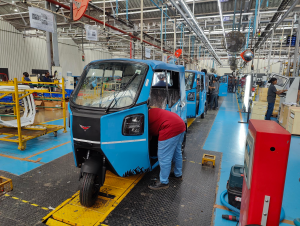
Multiple quality gates — before underbody unloading, mid-process during body closure, and at complete-vehicle stage — ensure disciplined and layered verification. Vehicles then move to dynamometer testing, road tests, two-post underbody checks, and a final buy-off before dispatch.
Precision Meets Intelligence
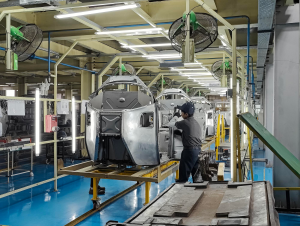
Production begins with punching a unique VIN for each vehicle, followed by the application of a Gen-11 ED coating — a passenger-car-grade corrosion protection layer that meets a 1,200-hour salt spray rating. Robots apply the top coat, delivering a consistent finish across every vehicle.
The assembly line is driven by a sophisticated digital backbone. Each work order is tracked in real time, linking torque values, serial numbers, batch production data, and process stages.
The body begins with five pre-assembly stations, moves through eight hanging conveyor stations for underbody integration, and then transitions to 12 floor-conveyor stations where the battery, seat partition, and hood structure are fitted. The result is a streamlined, data-backed progression from bare shell to finished vehicle.
A Supply Chain built for Speed, Simplicity, and Seamless flow
The 3W plant’s supply chain is designed for predictability and rapid response. Around 80% of suppliers operate nearby, and 60% are within Chennai. BIW components arrive in company-owned trucks with certified packaging, while ABS and injection-moulded plastics are delivered via a “milk run” from a supplier within 15 kms. Motors arrive from Sona Comstar, and axles come from Coimbatore. Bulk-purchase items like switches and fasteners are sourced from Delhi, aligning with their low urgency.
The warehouse uses a digital WMS built on FIFO, enabling efficient parts flow and variant-change management. This ensures, for instance, that transitions between fast-charging and standard battery variants avoid stock build-up.
A ‘SUPER’ Factory with a Storied Past and a Clear Vision
As the first Indian factory to produce any mobile vehicle post-Independence — the bicycle — the Ambattur plant carries deep historical significance. Today, this legacy extends to the company’s product philosophy. The “SUPER” acronym defines its consumer promise: Space and Comfort, Utility-based design, Performance, Earnings, and Reliability. The brand’s products — Super Auto, Super Cargo, and soon the Super Rig — are named to reflect this ethos.
Production Efficiency and Sustainability
The plant operates on a lean production model, keeping just a single day’s inventory and producing up to 75 vehicles per shift. Sustainability is embedded in operations: nearly 90% of power is sourced as green energy, and a 500-kW solar installation is underway to meet 25% of total consumption. Solar streetlights already illuminate the premises.
Water systems have been upgraded using biological treatment, tank-to-tank recycling, and a strict zero-discharge approach where waste is converted into powder for safe disposal. Paint ovens are undergoing LPG efficiency upgrades. Effluent treatment and ATP systems ensure water-saving, chemical optimisation, and environmental compliance.
Continuous improvement is pursued aggressively. Data from brake tests, paint flow, and motor vibration sensors feed into daily dashboards, supporting predictive maintenance and process optimisation.
This seamless blend of legacy, advanced engineering, and eco-friendly thinking makes the plant a powerful reminder that even long-standing manufacturing setups can adapt to the future of electric mobility.