EV News
Elektrobit Enables OEM Shift to Dynamic, Ethernet-Driven Vehicle Networks

In today’s world of auto industry, middleware developers sit quietly at the centre of hardware, software, and services. Their work is invisible to the everyday driver, yet it shapes almost every part of the driving experience. As vehicles move toward software-defined, connected, and autonomous mobility, this “hidden backbone” is becoming one of the most powerful forces in the industry.
For companies like Elektrobit, the opportunity is bigger than ever. Earlier, automotive software lived inside individual ECUs supplied by Tier-1s — fixed, isolated, and built simply to meet cost and reliability targets. But the new era is different. OEMs now want to decide how much functionality runs where, across an entire end-to-end architecture. Zonal controllers, central compute units, HPCs, and gateways all carry extra computing power, opening up choices that never existed before.

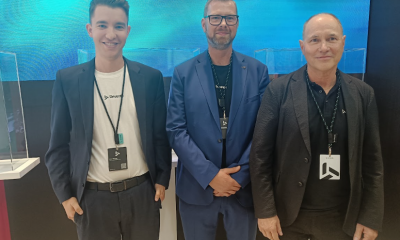
Speaking to this publication, Mr. Christoph Herzig, MD and Chief Commercial Officer, Elektrobit Automotive GmbH, said, this shift allows software features to move freely across control units — something that was impossible earlier due to lack of strong standards and limited in-vehicle networking. Today, with the rise of high-speed Ethernet working alongside traditional CAN and LIN, a flexible, dynamic network is finally taking shape.
Elektrobit’s middleware makes this possible. Its solutions work seamlessly across ECUs, allowing OEMs to build platforms that last across multiple product generations. A single architecture can now power everything from a $10,000 EV to a $120,000 performance SUV simply by scaling zones, compute power, or HPCs — all while reusing major components, he explained.

Future-proofing, not current constraints, now drives platform design. And at the heart of this transformation lies operating systems, middleware, and high-speed software-defined networking — exactly where Elektrobit is placing its bets, he pointed out.
Common Language
With several dozens of ECUs, sensors, and software layers inside a modern car, getting everything to talk to each other is one of the toughest challenges. Elektrobit believes the answer lies not just in middleware, but in something deeper — a semantic API.

Think of it as a “common language” for the whole vehicle. When designed properly, this single standard allows every function — from infotainment to ADAS — to communicate in the same way, even across components from different vendors. For an OEM, it means one consistent method for connecting high-level features to the lower layers of the vehicle.
But this only works when the API is designed end-to-end and followed strictly. Any variation breaks the chain. Without this discipline, even a simple upgrade — like moving from front/back cameras to a 360-degree camera — becomes expensive and messy, Mr. Herzig mentioned.
With a strong semantic API, however, the same camera can serve multiple purposes: ADAS safety, access control through facial recognition, or even new smartphone-based authentication features. All this becomes possible only when the system exposes the camera data securely, in a standardised way, across the whole architecture.
In short, a well-designed language inside the vehicle is what makes the future of software-defined mobility both scalable and affordable, he pointed out.
Balancing Fast Innovation with Safety, Cybersecurity
For middleware developers, innovation is exciting — but in cars, it can never come at the cost of safety or cybersecurity. Today’s vehicles are essentially IoT devices on wheels, and that means strict standards like ISO 26262 and UNECE WP.29 must be met at every step.
But Elektrobit doesn’t see these rules as barriers, said, Mr. Sai Sridhar, Managing Director of Elektrobit India. Instead, the company views them as design guides that help innovation happen in the right way. Earlier, safety-critical ADAS software had to run only on real-time microcontrollers, and anything outside that box was discouraged. This limited flexibility and forced developers to rework applications whenever hardware changed.
Now, modern high-performance chips — like those from Qualcomm — allow ADAS and infotainment to coexist on the same hardware while still isolating each function safely. Each partition meets the required safety and security standards, even though they share the same silicon.
For OEMs, this means more freedom. They can choose where to host features, upgrade infotainment software without disturbing safety systems, and introduce new ADAS capabilities without rebuilding everything from scratch.
The key is smart architecture – designing the software layers so that they give OEMs room to grow, innovate, and stay compliant — all at the same time.
Keeping Infotainment Flexible and ADAS Safe
Modern vehicles often separate infotainment and ADAS into different software containers to keep safety-critical functions isolated from fast-changing consumer features. Elektrobit understands this divide well — and helps OEMs manage both worlds without compromising safety or user experience.
According to Mr. Sridhar, the idea is simple – use one powerful system-on-chip that can run multiple isolated systems, each with its own rules. Infotainment gets frequent updates because it shapes the customer’s day-to-day experience. ADAS, however, must remain stable and thoroughly validated, so updates are rare and carefully controlled.
Elektrobit enables this dual-speed approach. Their tools let OEMs push continuous software updates to infotainment systems — almost like a smartphone — while keeping ADAS protected, steady, and reliable.
This also applies to over-the-air (OTA) updates. Some parts of a car, like brakes or steering, should rarely be touched except for critical fixes. Others, like comfort features or digital services, can evolve often. Elektrobit helps OEMs manage these different update levels in a coordinated, safe way across the entire vehicle architecture, he mentioned.
For carmakers working with multiple suppliers, this unified control is crucial. Elektrobit’s approach gives them the architecture and confidence to upgrade vehicles safely, smartly, and at the right pace for each function, Mr. Sridhar added.
Testing Smarter for a more Complex Software world
As vehicle software grows more complex, testing and debugging can no longer rely on old methods. Mr. Herzig, believed that the future of testing starts long before hardware is ready — and long before problems surface.
The first step, he said, is designing the test environment along with the system itself. Not every function needs heavy testing, but anything safety-critical demands deep attention.
Instead of waiting for tests to catch issues at the end, the team focuses on understanding the entire system upfront. This makes it clear how one small change might affect another part of the vehicle — something a single developer may struggle to judge in a modern, multi-layered architecture.
Testing alone can’t guarantee safety anymore. Automated testing, semantic code checks, and early quality gates are needed to avoid endless test cycles or hidden failures.
Mr. Sridhar pitched in stating that to push testing even earlier, a “shift-left” approach is essential. Before the actual hardware exists, developers can run real-time scenarios on their laptops by simulating hardware behaviour. Even a braking application, which normally depends on real-time hardware, can be tested virtually with the right tools.
This early, smarter testing helps teams manage rising software complexity while keeping safety at the centre — ensuring every update is reliable long before it reaches the vehicle, Mr. Sridhar added.
AI’s Growing Role
As vehicle software becomes larger and more interconnected, the natural question arises: can AI help build and manage tomorrow’s middleware? Mr. Herzig said, “yes — but with limits.”
He viewed AI as a powerful tool for testing, validation, and code quality. Modern vehicle software is too complex for humans alone to understand every ripple effect of a code change. Here, AI shines. It can analyse architectures, flag potential risks, and even highlight critical control points much faster than manual effort.
But when it comes to creativity — such as designing new standards or defining a long-term architecture — AI still falls short. It learns from what already exists, which means it imitates, not invents. For now, human judgement remains essential to shape consistent, future-ready system foundations, Mr. Herzig concluded.