EV News
India has the Opportunity to Lead in Sustainable Mobility: Dr Pawan Goenka

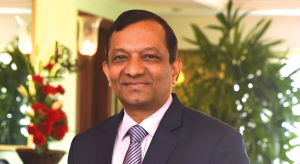
India’s automotive industry has wrapped up yet another record year — and what shines through this time is its soaring export growth. Over the past four to five quarters, exports have surged by nearly 20%, three to four times faster than domestic sales. If this pace continues, half of all vehicles made in India could be heading to global markets in the coming years, noted Dr. Pawan Goenka, Past President of SIAM and Chairman of the SCALE Committee under the Ministry of Commerce & Industry.
Speaking on ‘Key Enablers Driving Global Leadership in Sustainable Mobility’ at the 65th SIAM Annual Convention in Delhi, Dr. Goenka said the industry’s importance goes far beyond sales figures. It drives economic growth, builds technological capabilities, creates jobs, powers exports, and supports one of the strongest MSME networks in the country — while shaping India’s image as a trusted hub for advanced manufacturing.
Paving India’s Road to Sustainable Mobility
As India sets its sights on becoming the world’s third-largest economy and a developed nation by 2047, mobility is poised to play a central role in that transformation. Vision 2047 imagines a $32 trillion economy with clean air, safe roads, energy independence, world-class infrastructure, and global leadership in technology and innovation — and the auto industry will be key to achieving each of these goals, he said.
Mobility can drive growth by boosting GDP and exports, cutting oil imports, improving air quality, and positioning India as a leader in EVs, hydrogen, connected vehicles, and clean energy. According to him, the country already has strong enablers: a large domestic market, globally competitive suppliers, robust digital infrastructure, leadership in renewables, and policy support through initiatives like FAME, PLI, Gati Shakti and the National Green Hydrogen Mission.
However, India must reduce its reliance on imported batteries, rare earths, and power electronics by building local R&D, battery recycling, and circular economy systems to secure the EV supply chain, he observed. The roadmap is clear — speed up the shift from fossil fuels to clean mobility, invest in hydrogen alongside EVs, adopt software-driven vehicles, and embed road safety and shared mobility into the core of sustainability.
Strengthening public transport, expanding metro networks, building multimodal systems, deploying smarter traffic management, improving road infrastructure, and ensuring 90% clean power by 2047 will also be crucial. “India now has the chance to lead the world in sustainable mobility — especially in last-mile EVs like scooters, e-rickshaws, small cargo carriers and mass-market EVs for Asia, Africa and Latin America,” he mentioned. By 2047, the Indian auto industry aims to be among the global top three — not just in volumes, but also in technology, safety, quality and sustainability — proving that the road to sustainable mobility can indeed run through New Delhi, he said.
Tapping Global Opportunities
Dr. Goenka sees vast untapped potential for the Indian automotive industry on the global stage — especially in auto components, electric vehicles, and last-mile mobility. He points out that India’s auto component industry currently has less than 1.5% share in the global market, but has the capability to grow to 5–10% over the next 15 years. With strong technological skills, rising quality standards, and the ability to invest and scale, Indian suppliers are well placed to achieve this once current market challenges ease.
He also sees a strong opportunity in electric vehicles. India is already doing well in electric two-wheelers in terms of volumes, and has the technology to compete globally. Electric passenger vehicles, now being developed with local design and engineering, are reaching world-class levels. Dr. Goenka suggests India should focus on specific EV segments where it has an edge, especially in emerging markets across Asia, Africa and Latin America, instead of trying to cover every niche.
Another promising space, he adds, is three-wheelers. India leads the world in 3W design, technology and scale, and these vehicles are ideal for affordable, practical last-mile connectivity. “If we can make the world see the value of three-wheelers, we can lead this segment globally,” he added.